Kwanyani Lexember 2025
- Date:
- 2026-01-02
- Status:
- Finished
- License:
CC 4.0 BY-NC-SA
For Lexember 2025 I decided to create vocabulary for all terms in the Landscape part of the Visual Dictionary from Wiktionary. This page is the result of the effort.
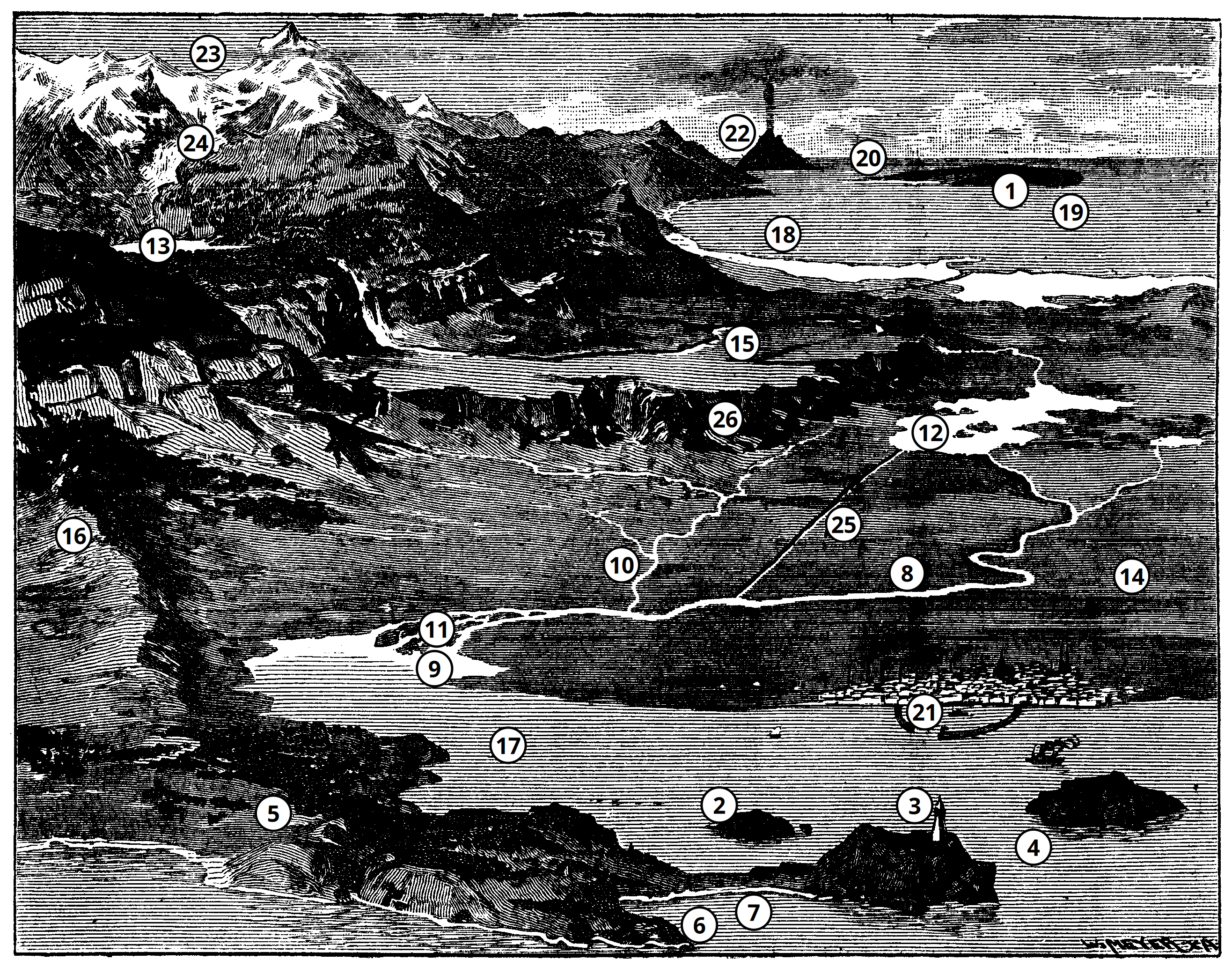
1. Island: âfumbâ
1.1. New Words
âfumbâ n. island, land, earth
1.2. Example
[ˈⁿtsi.ku
Nsiku
nsiku
bird
ˈᵑgʷele
ngwele
n=wele
attr=many
ˈsama
sama
sama
dwell
tɕa
cha
cha
at
ki
ki
ki
this
ʔəˈɸuᵐbə
âfumbâ
âfumbâ
island
ᵑki]
nki.
n=ki
attr=this
Many birds live on this island.
2. Islet: chikâfumbâ
2.1. New Words
chikâfumbâ n. islet, holm, skerry, rock (in the sea); usually uninhabited
This is just last day’s word with the diminutive prefix che(k)-/chi(k)-. The allomorphs are due to vowel harmony and historical sound changes that turned all syllables into CV.
che- for consonant-initial words with low/-ATR vowels a, e, o
chi- for consonant-initial words with high/+ATR vowel â [ə], i, u
chek- for vowel-initial words with low/-ATR vowels
chik- for vowel-initial words with high/+ATR vowel
Most words are consonant-initial. My plan is for the historical k coda to disappear leaving a high tone, but I haven’t finished the tone system yet.
2.2. Example
[ˌtɕikəˈɸuᵐbə
Chikâfumbâ
chik-âfumbâ
dim-island
ˌʔunuˈkiɾʑu
unukirhu,
unukirhu
be_white
ˈʔix̞ʷi
ihwi
ihwi
because
ˌⁿtsi.kuˈⁿtsi.ku
nsiku-nsiku
nsiku~nsiku
bird~pl
ˈkaka
kaka
kaka
poo.pfv
ˈtɕax̞a]
chaha.
cha=ha
on=3sg.in
The islet is white because the birds pooed on it.
2.3. Grammar
The rh can be pronounced as the Czech fricative trill “ř” [r̝], as a flap with fricative release [ɾʑ] or as a voiced alveolo-palatal fricative [ʑ].
When s is prenazalised to ns, it’s pronounced with an affricate [ⁿts].
Adjectives function as (static) verbs. When used predicatively they go where the a verb would normally go in a clause. When used attributively they are prefixed with the attributive particle/genitive preposition/relativizer n- and are indistinguishable from relative clauses.
Kwanyani nouns are not marked for gender or case, but may optionally be marked as plural using full reduplication.
3. Lighthouse: watekwa renya
3.1. New Words
tekwa n. streetlight, watchfire, fire for light
chetekwa n. flashlight, lamp, torch
watekwa n. floodlight, signal fire, beacon
renya v. attract, invite, beckon
watekwa renya n. lighthouse
3.2. Example
[ˌʔox̞eˈx̞eʎa
Ohehelya
uh-he~helya
nv-ipfv~shine
waˈtekʷa
watekwa
wa-tekwa
aug-fire
ˈreɲa
renya
Ø=renya
attr=beckon
ko
ko
ko
to
ˈkeᵑgo
kengo
kengo
overside
ˈᵐpaᵑka]
mpanka.
n=panka
attr=sea
There’s a lighthouse shining out over the sea.
3.3. Grammar
The wa-/wâ- prefix is the augmentative.
Before r and nasals, the atributive clitic n- disappears.
The u(h)-/o(h)- “neutral voice” verbal prefix is a difficult one to explain. It causes the word order to change from SVO to VSO, it marks that the subject is indefinite, and is used to introduce a new subject. Basically it turns “the X Y-s” to “there’s an X Y-ing”.
Kwanyani has few prepositions, but many “compound prepositions”. Insead of saying “onto something”, you say “to the overside of something”.
4. Sound: hwingâ
4.1. New Words
kele n. side
rawe adj. second, other
kelerawe n. other side, opposite side
hwingâ n. sound, straight
4.2. Example
[ˈbaⁿtse
Banse
banse
now
ˌaᵑkʷeˈkʷeⁿda
ankwekwenda
an-kwe~kwenda
av-ipfv~kwenda
ˈtekʷa
tekwa
tekwa
light
ⁿtɕa
ncha
n=cha
attr=on
ˌkeleˈrawe
kelerawe
kelerawe
otherside
ˈᵑxʷiᵑgə]
nhwingâ.
n=hwingâ
gen=sound
Now I’m seeing the lights on the other side of the sound.
4.3. Grammar
The subject may be dropped if it matches the subject of a previous sentence or it’s clear from context in a new discourse.
The an-/ân- prefix indicates transitivity, active voice, and definiteness of the subject/agent.
Imperfective aspect is indicated with reduplication of the first syllable of the verb stem (for regular verbs). Some verbs have different stems (suppletion) for the perfective and imperfective aspects (or will have, because I haven’t work on that yet).
The attributive clitic n- signifies that the preposition phrase “on the other side of the sound” describes the location of the noun (where the lights are), not the action (where the seeing happens).
5. Shore with Dunes: tunyu lâ fundâ
5.1. New Words
tunyu n. beach, shore, riverbank
fundâ n. dune
5.2. Example
[ˈʔejo
Eyo
eyo
3sg.an
ʔaˈᵑgʷesa
angwesa
an-wesa
av-say
saˈᵑkoⁿdʑa
sankonja
s=an-konja
compl=av-drive.pfv
moˈtoka
motoka
motoka
car
ˈⁿtuɲu
ntunyu
n=tunyu
attr=beach
lə
lâ
lâ
with
nəˈⁿtɕəkə
nânchâkâ
nânchâkâ
nunchuk
tɕa
cha
cha
at
ˈɸuⁿdə]
fundâ.
fundâ
dune
He said that he drove a beach buggy with nunchucks on the dunes.
5.3. Grammar
Third person pronouns distinguish number and animacy, but not gender or case.
The complementizer (“that”) appears as an s- before vowels and causes a devoicing/fritivization (like Grimm’s Law) on initial consonants.
For subordinate clauses the active voice prefix an-/ân- also indicates that the subordinate clause subject is the same as the main clause subject. To mark that the subordinate clause has a “different he”, the “neutral voice” / “different subject” prefix oh-/uh- is used instead (along with a switch from SVO to VSO word order).
6. Cape: koke nâfumbâ
6.1. New Words
koke n. Anatomy: head, Geography: cape, headland
koke nâfumbâ n. cape, headland
6.2. Example
[ˈkudu
Kudu
kudu
drive.imp
ko
ko
ko
to
waˈtekʷa
watekwa
wa-tekwa
aug-fire
ˈreɲa
renya
Ø-renya
attr=beckon
ⁿtɕa
ncha
n=cha
attr=on
ˈkoke
Koke
koke
cape
ˈⁿtoᵑge
nTonge
n=tonge
attr=tonge
lə
lâ
lâ
and
ˈsidu
sidu
sidu
walk.imp
ko
ko
ko
to
niˈsəli
nisâli
nisâli
cabin
ˈᵑxiⁿtə]
nhintâ.
n=hintâ
attr=1pl.excl
Drive to the lighthouse on Cape Tonge and walk to our cabin.
6.3. Grammar
The imperative uses the irrealis stem of the verb. The realis stem is most often formed from the irrealis stem by some combination of prenasalizing and palatalizing the second consant of the CVC root, as well as lowering the root vowel. The realis stem usually ends in the vowel -a and the irrealis stem in -u. As an example, the irrealis stem of drive is kudu and the realis stem is konja.
7. Isthmus: bungu nâfumbâ
7.1. New Words
bungu n. Anatomy: neck, Geography: isthmus, neck of land
bungu nâfumbâ n. isthmus, neck of land (more explicitly the geographic sense)
7.2. Example
[ˈkomo
Komo
komo
1sg
keˈkoⁿdʑa
kekonja
ke~konja
ipfv~fare
lə
lâ
lâ
with
ˈwelo
welo
welo
bike
tɕa
cha
cha
on
ˈkugi
kugi
kugi
road
ˈᵐbuᵑgu
mbungu
n=bungu
gen=isthmus
ko
ko
ko
to
ʔiˈkuru
ikuru
ikuru
house
ˈᵐbunə
mbunâ
n=bunâ
gen=coffee
ⁿtɕa
ncha
n=cha
attr=on
ˌkeleˈrawe
kelerawe,
kelerawe
otherside
ˈʔix̞ʷi
ihwi
ihwi
because
ˈnaⁿdʑa
nanja
nanja
want.stat
ˈkoɲe
konye
h=gonye
compl=eat.pfv
gaˈlase]
galase.
galase
ice_cream
I was cyling on the isthmus road to the café on the other side, because I wanted to eat ice cream.
7.3. Grammar
The verbal complement of nanja to want is not an infinitive, but a subordinate clause with a finite verb, like in Modern Greek.
Stative verbs do not have a distinction between perfective and imperfective aspect and always use the unmarked “perfective” form, even though they theoretically could be considered more imperfective in meaning.
8. River: bilunu
8.1. New Words
bilunu n. river, flow, current
naha n. city
8.2. Example
[tɕa
Cha
cha
in
ˈbemo
bemo
bemo
separation
ᵐbiˈlunu
mbilunu
n=bilunu
gen=river
ʔoˈsex̞ʷa
osehwa
uh-ehwa
nv-exist
ˈnax̞a
naha
naha
city
ˈᵑgʷawa]
ngwawa.
n=wawa
attr=great
Between the rivers lies a great city.
8.3. Grammar
An adverbial may be moved to the very beginning of the sentence (before the subject, if it precedes the verb) to turn it into a “frame setter”, which introduces the setting of the sentence in time or space. (Learn more about frame setters in Conlangery episode 153, Information Structure with Aidan Aannestad, at 44:00.)
9. River Mouth: bumu mbilunu
9.1. New Words
bumu n. mouth, lip, opening, river mouth
bumu mbilunu n. river mouth (more explicitly the geographic sense)
I couldn’t come up with an interesting example today. :-)
But I’ll share something about word building. It was not my plan to make up a conculture for the conlang, but I have spent some time thinking about where this conlang would belong geographically. I’ve drawn influence from Bantu and Austronesian languages, so I’ve started to imagine something like “What if there were another Madagascar (but smaller)?”. Some granite (non-volcanic) island in the Indian Ocean, similar to the Mahé island of the Seychelles, maybe?
10. Tributary: bilunu ndoga
10.1. New Words
loga n. help, aid, auxiliary, supplement
bilunu ndoga n. tributary
benda v. to flow
lâ kugi n- prep. through, via
10.2. Example
[biˈlunu
Bilunu
bilunu
river
ˈⁿtsewe
nSewe,
n=sewe
gen=sewe
ᵑkʷa
nkwa
n=kwa
rel=be
ˈloga
loga
loga
tributary
ᵑko
nko
n=ko
attr=to
biˈlunu
bilunu
bilunu
river
ˈᵑgote
nGote,
n=gote
gen=gote
ˈbeⁿda
benda
benda
flow
lə
lâ
lâ
by
ˈkugi
kugi
kugi
way
ˈnax̞a
naha
n=naha
gen=city
ⁿtəˈⁿdimu
ntândimu,
n=tandi=mu
gen=home=1sg
ʔaˈlenⁿtso]
Alenso.
alenso
alenso
The Sewe River, which is a tributary of the Gote River, flows through my hometown, Alenso.
10.3. Grammar
When non-obstruent consonants are prenasalized, they mutate like this:
nasal and prenasalized consonants remain unchanged
r and rh are unchanged (the nasal disappears)
l fortifies into nd
ly and y nasalize into ny
w fortifies into ngw
11. River Delta: jekwembo mbumu
11.1. New Words
embo n. corner
jiku num. three
jekwembo n. triangle
jekwembo mbumu n. river delta
gega n. mud, clay, silt
11.2. Example
[biˈlunu
Bilunu
bilunu
river
ˌʔaⁿteˈtoma
antetoma
an-te~toma
av-ipfv~cover
dʑeˈkʷeᵐbo
jekwembo
jekwembo
triangle
ˈᵐbumu
mbumu
n=bumu
gen=river_mouth
lə
lâ
lâ
with
ˈgega]
gega.
gega
mud
The river covers the delta with silt.
11.3. Grammar
The imperfective stem of the verb is used for actions occurring habitually and for general truths.
12. Lake: gwânshâ
12.1. New Words
gwânshâ n. lake
12.2. Example
[ˈbaⁿtse
Banse
banse
now
siˈrumə
sirumâ
sirumâ
sun
heˈx̞eʎa
hehelya
he~helya
ipfv~shine
tɕa
cha
cha
on
ˈbuᵑgu
bungu,
bungu
isthmus
ˌᵑkebeˈbamo
nkebebamo
n=ki-be~bamo
rel=pv-ipfv~embrace
ˈgʷəⁿɕə
gwânshâ
gwânshâ
lake
ˈⁿtsiʎə
nSilyâ
n=silyâ
gen=silyâ
lə
lâ
lâ
with
ˈkumu
kumu
kumu
arm
ɲaˈmembe]
nyamembe.
n=lyamembe
attr=blue
Now the sun is shining on the istmus, which Lake Silyâ embraces with blue arms.
A translation of a line from the song “Slåttervisa”, performed by the acapella group Viba Femba (you can find it on Spotify and YouTube).
13. Tarn: kwere
13.1. New Words
kwere n. tarn, mountain lake, pond
belya v. bathe, spend time in water for leisurely pleasure, to swim (when not going anywheree)
13.2. Example
[kiˈrumu
Kirumu
kirumu
3pl.an
ˈbeʎa
belya
belya
swim
tɕa
cha
cha
in
ˈkʷere
kwere,
kwere
tarn
lə
lâ
lâ
and
kʷiˈkʷəx̞ə
kwikwâhâ
kwikwâ=ha
water=3sg.in
ˈʔuwə
uwâ
uwâ
be_warm
ku
ku
ku
that
ˈʍələ
hwâlâ
hwâlâ
day
ᵑku]
nku.
n=ku
attr=that
They swam in a tarn, and its water was warm that day.
13.3. Grammar
The personal pronouns of Kwanyani distinguishes between first person exclusive and inclusive. First exclusive, second, and third persons pronouns have singular and plural forms. The first person inclusive have dual and plural forms, and this is the only part of the grammar where the dual shows up. The table of pronoun forms becomes more regular if one thinks of minimal vs augmented (instead of singular vs plural) for four persons: 1, 1+2, 2, and 3.
See https://en.wikipedia.org/wiki/Grammatical_number#Minimal,_unit_augmented,_and_augmented
Minimal personal pronouns (independent and clitic forms):
1SG: komo, =MU
1DU.INCL: yumbâ, =MBA
2SG: wende, =NDE
3SG.AN: eyo, =YO
3SG.IN: oha, =HA
Augmented personal pronouns (independent forms only):
1PL.EXCL: hintâ
1PL.INCL: binsi
2PL: dulu
3PL.AN: kirumu
3PL.IN: asahe
14. Lowland: âfumbâ ndesa
14.1. New Words
desa n. underside, low
cha desa n- prep. under
âfumbâ ndesa n. lowland, Capitalized: the Netherlands
14.2. Example
[ˈkomo
Komo
komo
1sg
ʔaˈnaⁿdʑa
ananja
an-naja
av-want
ˈkoⁿdʑa
konja
konja
fare
lə
lâ
lâ
with
ˈwelo
welo
welo
bike
tɕa
cha
cha
in
ʔəˈɸuᵐbə
Âfumbâ
Âfumbâ
land
ˈⁿdesa]
nDesa.
n=desa
gen=low
I want to cycle in the Netherlands.
15. Highland: âfumbâ nkengo
15.1. New Words
kengo n. overside, height
cha kengo n- prep. over
âfumbâ nkengo n. highland
16. Ridge: kâtu nteme
16.1. New Words
kâtu n. ridge, Anatomy: back, Geography: mountain ridge
teme n. mountain
kâtu nteme n. mountain ridge (more explicitly the geographic sense)
16.2. Flag
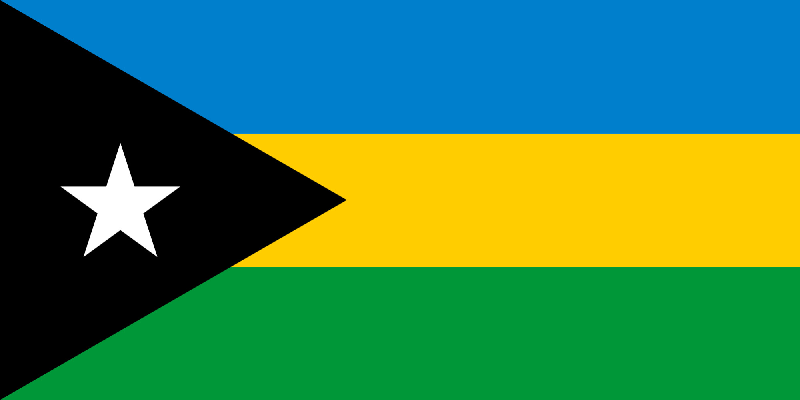
A while ago I played with https://flag-creator.com/ and made a flag for the fictitious island where Kwanyani is spoken.
17. Bay, Gulf: jumâ ntunyu
17.1. New Words
jumâ n.
hollow, hole, pocket
lap, bosom, embrace, arms
den, (hollow of a) bird’s nest
bay, gulf
jumâ ntunyu n. bay, gulf (more explicitly the geographic sense)
17.2. Example
[ˈrawe
Rawe
rawe
two
ˈɲaᵑga
nyanga
nyanga
child
ʔaˈnaⁿdʑa
ananja
an-nanja
av-want
ˈʍəɲu
hwânyu
h-wânyu
compl=sit
tɕa
cha
cha
in
ˈdʑumə
jumâ
jumâ
lap
ˈmama
mama
n=mama
gen=mom
kiˈrumu]
nkirumu.
n=kirumu
gen=3pl.an
The two children wanted to sit in their mother’s lap.
18. Beach: tunyu ndânku
18.1. New Words
dânku n. sand
kâtu ndânku n. sandbank
tunyu ndânku n. beach, sandy shore, sandy riverbank
19. Sea, Ocean: halacha, panka
19.1. New Words
halacha n. sea (from where you can see the coast)
panka n. ocean, sea (from where you can’t see the coast)
sindâ n. breadth, extent from side to side
lâ sindâ n- prep. across (the breadth)
19.2. Example
[kiˈrumu
Kirumu
kirumu
3pl.an
ˈkoⁿdʑa
konja
konja
fare
lə
lâ
lâ
across
ˈsində
sindâ
sindâ
width
ˈᵐpaᵑka
mpanka
n=panka
gen=ocean
we
we
we
from
ʔəˈɸuᵐbə
âfumbâ
âfumbâ
island
ˈneka
neka
n=eka
attr=first
ko
ko
ko
to
ʔəˈɸuᵐbə
âfumbâ
âfumbâ
island
ˈrawe]
rawe.
n=rawea
attr=other
They travelled across the ocean from one island to the other island.
19.3. Grammar
The meanings of the preposition lâ include:
Comitative: in company with (someone)
Instrumental: using (something)
Perlative: through, across, along [new meaning from today]
Lâ is also the conjuction “and”.
20. Horizon: tunyu rhimbi
20.1. New Words
rhimbi n. sky, heaven
tunyu rhimbi n. horizon (literally: “sky shore”)
degwe n inside
ko degwe n- prep. into
20.2. Example
[siˈrumə
Sirumâ
sirumâ
sun
ˈseⁿdʑa
senja
senja
step
lə
lâ
lâ
across
ˈsində
sindâ
sindâ
width
ˈⁿtuɲu
ntunyu
n=tuny
gen=shore
ˈɾʑiᵐbi
rhimbi
n=rhimbi
gen=sky
ko
ko
ko
to
ˈdegʷe
degwe
degwe
inside
ˈᵐpaᵑk>a]
mpanka.
n=panka
gen=ocean
The sun stepped across the horizon into the ocean.
20.3. Inspiration
Tuny rhimbi is a calque of the Finnish word taivaanranta.
21. Harbour, Port: ondofo
21.1. New Words
ondofo n. harbor, port
21.2. Grammar
The letters/phones f [ɸ], h [x̞], and hw [x̞ʷ] are allophones of “one and a half” phoneme: a non-sibilant fricative, with labialization only phonemic before non-rounded vowels.
Valid combinations:
he, hi, hwe, hwi
ha, hâ, hwa, hwâ
fo, fu
If f appears before a non-roubded vowel it turns into hw, and if h or hw appear before a rounded vowel they turn into f.
22. Volcano: teme ngwahenga
I’ve been looking forward to this one!
22.1. New Words
kolyo n. contained fire (like in a stove, oven, kiln or furnace; not for light, or in the open like in a campfire or bonfire)
henga n. oven
wahenga n. kiln
teme ngwahenga n. volcano (literally “kiln mountain”)
teme ngwahenga lâ kolyo n. erupting volcano (“kiln mountain ablaze”)
23. Ice Cap: tumunu mboro
23.1. New Words
tumunu n. coating, (non-rigid) cover, blanket (metaphorically)
boro n. snow, ice
tumunu mboro n. ice cap
24. Glacier: bilunu mboro
24.1. New Words
bilunu mboro n. glacier
24.2. Example
[ˈboro
Boro
boro
snow
ʔaˈᵐbeᵑka
ambenka
an-benka
av-put
ˌtumuˈnux̞ə
tumunuhâ
tumunu=ha
cover=3sg.in
tɕa
cha
cha
at
ˈkeᵑgo
kengo
kengo
overside
ˈⁿteme
nteme
n=teme
gen=mountain
la
lâ
lâ
and
biˈlunu
bilunu
bilunu
river
ˈᵐboro]
mboro.
n=boro
gen=ice
The snow layed its cover over mountain and glacier.
25. Canal: bilunu nkekonsa
25.1. New Words
kekonsa adj. constructed, man-made, artificial (actually passive voice of the verb konsa make, build, construct)
bilunu nkekonsa n. canal (“man-made river”)
kwânyâ n. tongue, language
kwânyâ nkekonsa n. conlang ❤️
26. Cliff: tibunu nâfumbâ
26.1. New Words
tibunu n. an instance of the act dropping, the distance which something drops, very steep or nearly vertical rock face
tibunu nâfumbâ n. rock face, cliff (more explicitly the geographic sense)
26.2. Example
[tɕa
Cha
cha
on
ˈkeᵑgoˈ
kengo
kengo
top
ⁿti’bunu
ntibunu
n=tibunu
gen=cliff
ˈhiⁿtə
hintâ
hintâ
1pl.ex
aᵑˈkʷeⁿda
ankwenda
an-kwenda
av-see
ˈkeᵑgo
kengo
kengo
top
ˈᵐboje]
mboye.
n=boye
gen=cloud
From the top of the cliff we saw the top of the clouds.
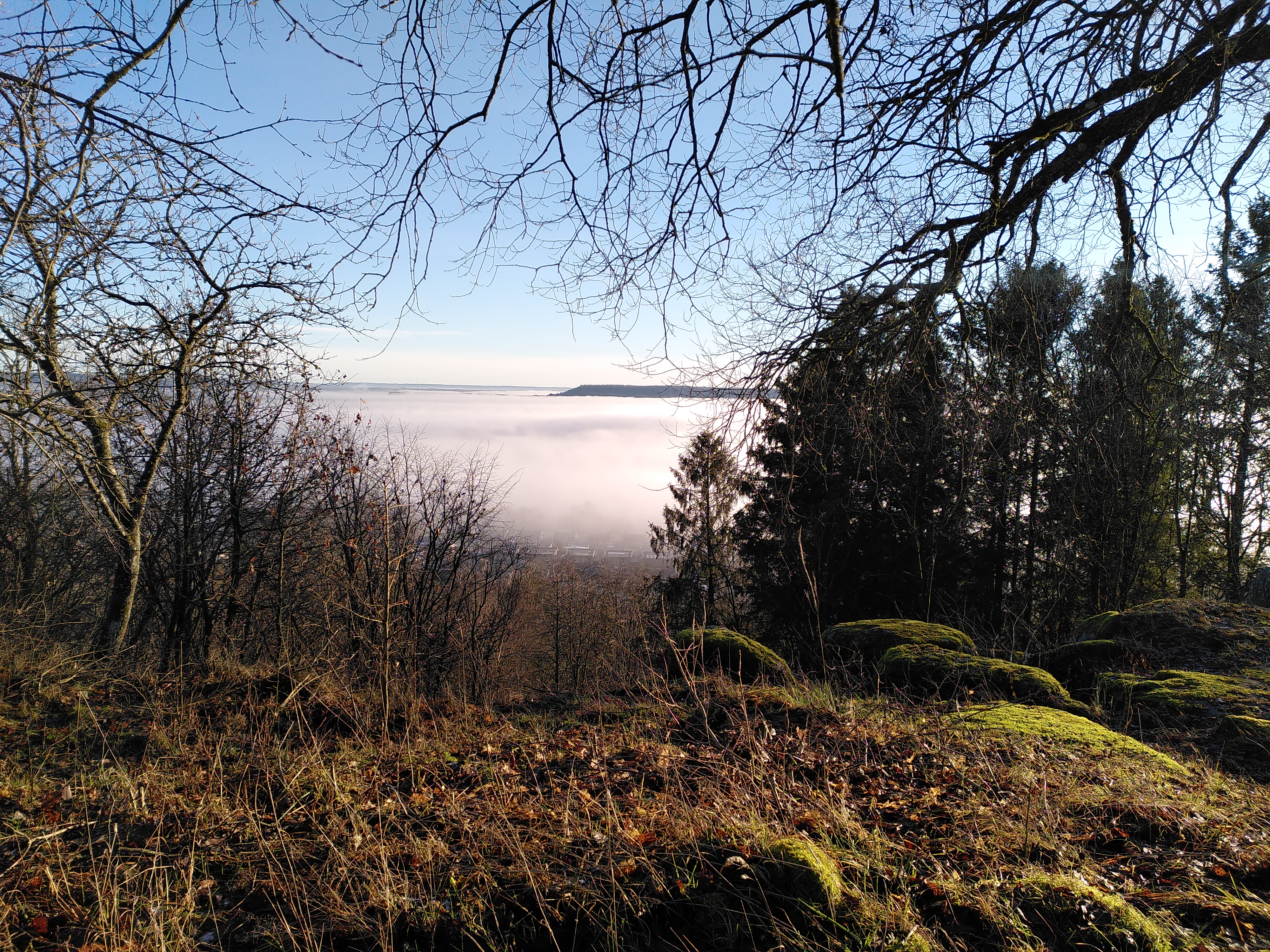
27. Landscape: kwidunu nâfumbâ
27.1. New Words
kwidunu n. view, visual perception, act of seeing
kwidunu nâfumbâ n. landscape, scenerey, view
27.2. Example
[ˈbiⁿtsi
Binsi
binsi
1pl.in
keˈkoⁿdʑa
kekonja
ke~konja
ipfv~travel
lə
lâ
lâ
along
ˈkugi
kugi
kugi
road
ᵑkʷiˈdunu
nkwidunu
n=kwidunu
gen=view
nəˈɸuᵐbə]
nâfumbâ.
n=âfumbâ
gen=land
We’re taking the scenic route.
Now all 26 words in the “landscape” visual dictionary are finished as well as the title itself. I originally committed to these 27 days, and I haven’t decided yet what to do with the remaining four of Lexember.
28. My Lexember 2025 in HTML
Made this page public. :-)